
I have recently been reviving this blog (does anyone still call it that?) after a lull following big changes in my life. Looking back on the first post (cringe!), I realised that it’s been more than 15 years since I first started writing about anything to do with fashion, whether it is making, pattern cutting, designing, sustainability, materiality or just life lessons I have gained during my journey. Having all this recorded in perpetuity has been one of the best decisions of my life. I never meant for the blog to become anything big, more a study and record of how I see fashion. It is strangely interesting to see how my habits have changed and opinions matured.
It started out with me making things to wear out of necessity, before slowly evolving to a process where I created a deeper connection with the items I make. I learnt that having the skills and ability to make also meant that I had the responsibility to be considerate within my practice, whether its is collections that resonate with the wearer, slow fashion or circularity, craftsmanship or just the process of loving what you are making. Garments made from these associations become more meaningful, and form a more positive influence to what is happening within the fashion industry and in essence, the world.
We now live in the time where convenience, accessibility and efficiency is tied to consumerism. Profit seems to dictate the tenure of a creative director in a fashion house, not their creativity and conformity can dictate what you wear rather than personal choice. Garments that are cheaper than a bar of chocolate proliferate charity shops, while algorithms set by social media companies idealise a certain lifestyle and with AI, we don’t know what is real anymore. In the end, we start to believe what we have been sold and subconsciously go to the shop and start buying clothes that turns us into clones.
I noticed this the other day, while drunk on Prosecco, that my wardrobe looked so lifeless. There was a period of my life recently that I was too busy to make. For convenience sake, I went to buy clothes in the shops, lying to myself when I picked up a discounted piece saying “It will go to the landfill if no one buys this!”. Before long, it was the same elasticated trousers, the same tone of green, navy, the same of everything everyone else is wearing. “Great!” I thought. I am wearing a uniform and some of these guys are wearing it much better than me. If I had not styled it with the garments I had made in the past, I would have gone back to square one, before I started this blog, back to buying clothes that didn’t look good on me, fitted badly, made me feel irrelevant and above all, disconnected from fashion. Naturally, I was told to go to bed because my drunken rant had started being so loud, there was a potential of upstaging my neighbour’s whiny dogs.
It also made me realise that I was not able to have a deeper conversation with my students about fashion if I continue to participate in the proliferation of bad fashion. “Talk the talk and walk the walk!” Taking my own advice, I needed to go back to my roots.
Strangely enough, going back to my roots resulted in this jacket. A shorter version of the Chinese ‘Changshan’, I decided to make a jacket to wear as an intermediary piece for the cold days ahead and to style with other ‘boring’ garments in my wardrobe. Often appropriated badly by western culture as a costume of a kung fu master; you see a fake moustache and skull cap with a braided ponytail included with the pack. However, this garment is rich in history and worn by people ranging from court officials, to poets, to your everyday Chinese man. Seen as the counterpart to the female version, Cheongsam or Qipao, the Changshan or Changpao was a traditional garment worn by the Manchu men during the Qing Dynasty in China. Considered the formal wear of Chinese men before the introduction of western suits, this historical garment could also be seen as a form of oppression by the Manchus on Han Chinese. Depending on how you see it, the Changshan eventually became a staple in the wardrobe because as a utilitarian piece, it behaved like a French work jacket where it was worn for work and play.
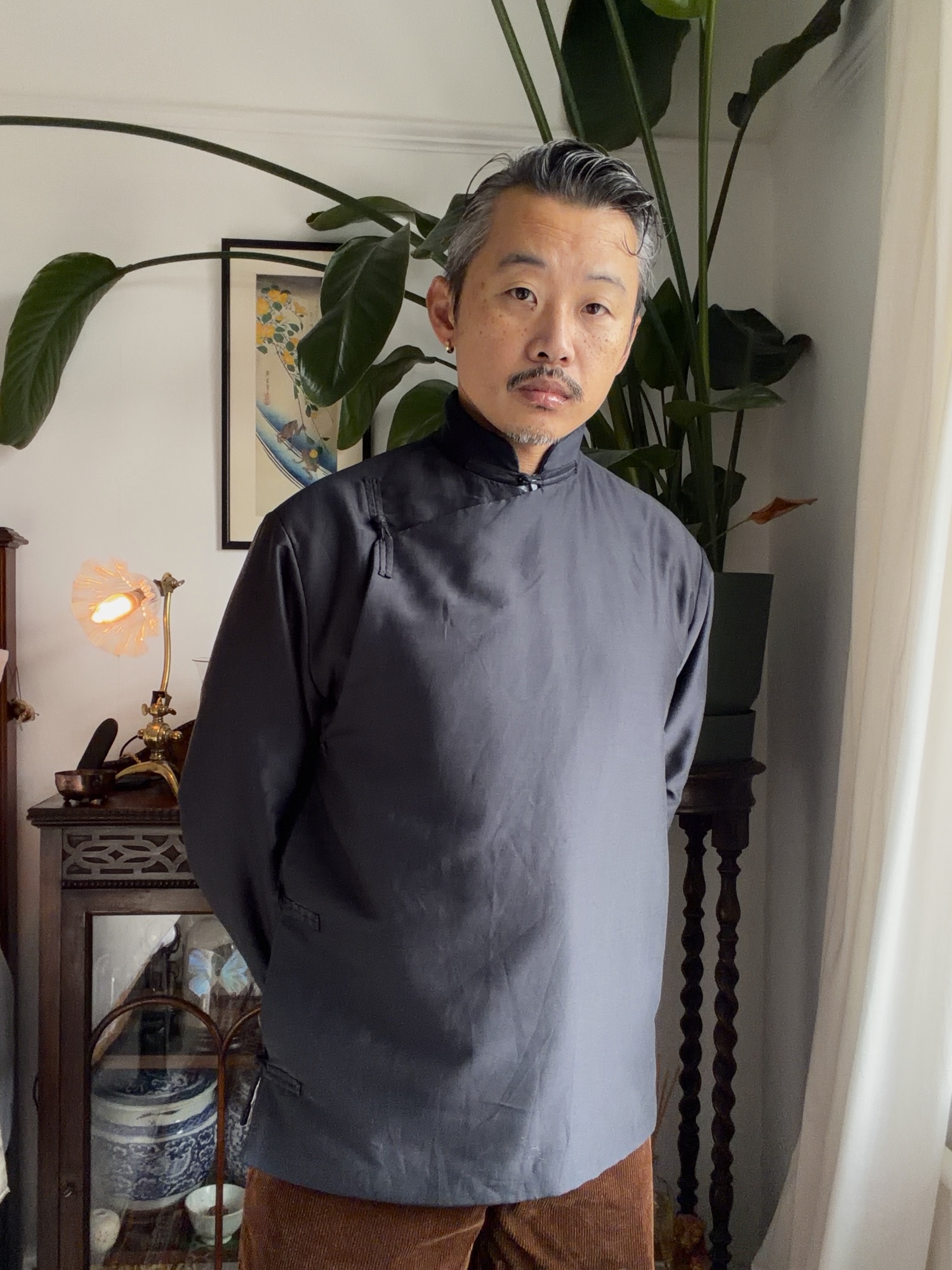
So why did I decided to make a historical piece of garment to wear everyday? Culturally, I do not seem to have any garments relating to my heritage. Often seen as a costume and cheaply made, most Chinese men avoid it except for formal occasions such as weddings or Chinese New year. It is interesting that something that was once worn daily, almost like a uniform had become so obsolete that the closet iteration is the tang suit, which is making a come back thanks to Adidas.
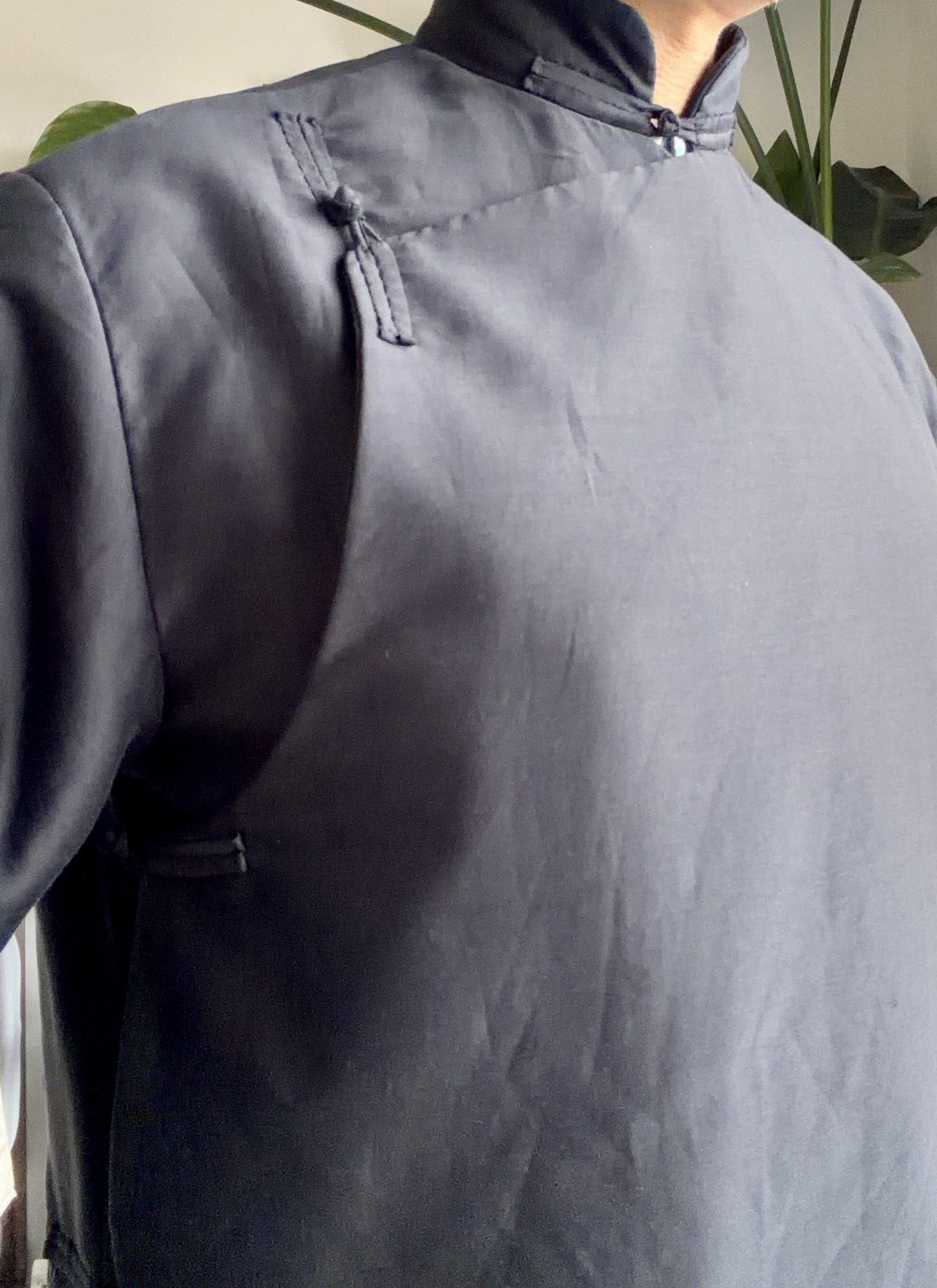
To make this jacket, I used a French work jacket pattern and altered it to fit the design. A Changshan is fastened at the side of the garment opposed to a tang suit which is fastened in the centre front. It has the famous Mandarin collar and uses Pankou buttons as fastening. In ensuring that the jacket kept me warm I sandwiched wool fabric between the outer fabric and lining. The outer fabrics was a remnant of a fabric from previous projects while the wool was offcuts, also from the previous projects. I initially wanted to line the jacket with silk but I had none available so went for some polyester lining as I couldn’t find inexpensive natural fibre lining.
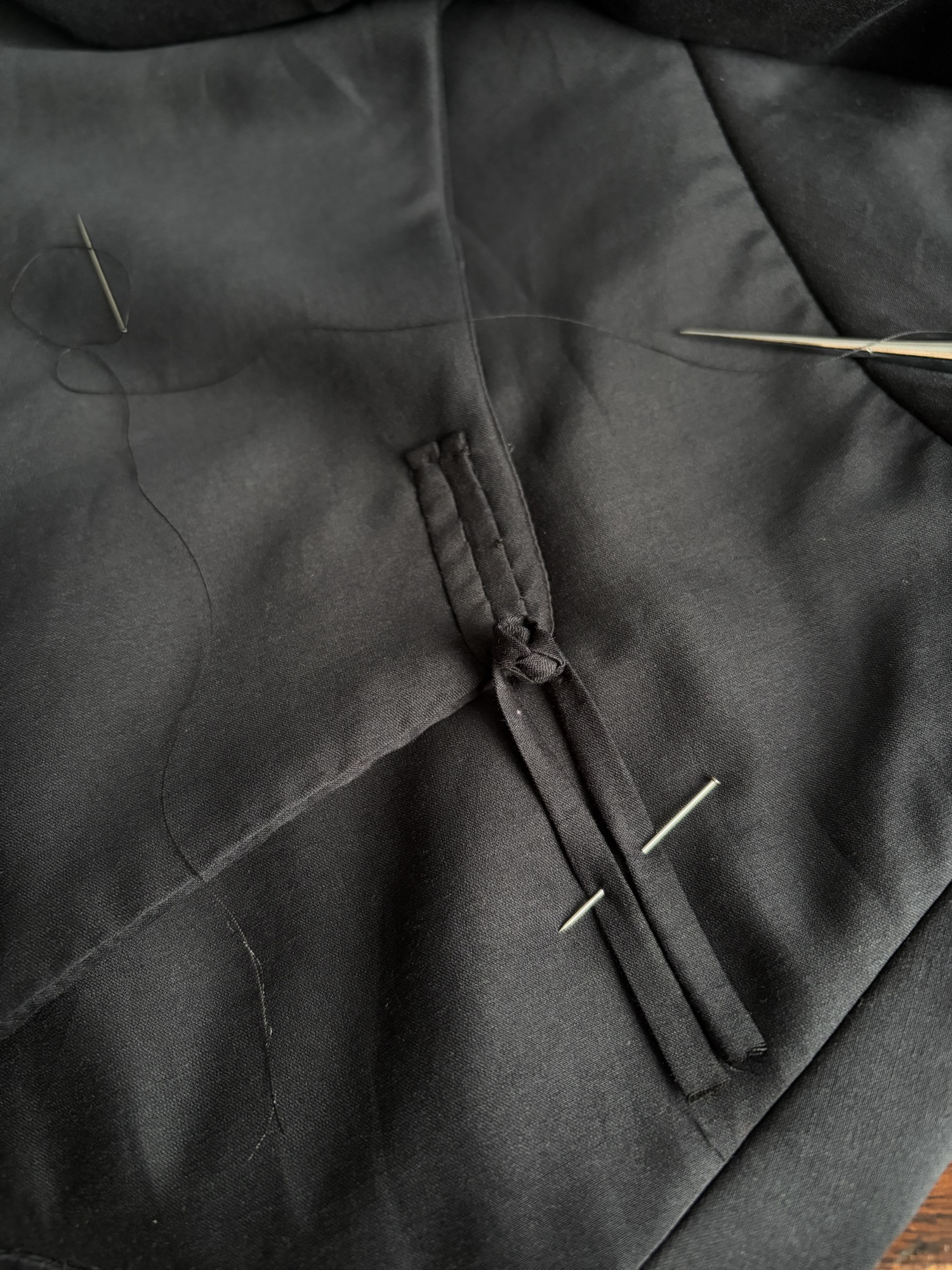
The major investment for this piece were some Japanese sewing needles I bought online. I had grown frustrated with cheap needles from sewing kits you get from a hotels that bend easily and are a pain to work with. I was sure I had some proper sewing needles, but they have seemed to disappeared during a recent move. These Japanese needles are amazing to sew with as they glide effortlessly between the fabric and make sewing the wool fabric together to the outer fabric such a delight. I also used it to close up the lining and sewing on the buttons. Hand sewing part of this garment slowed down the making but it gave me control over the process and it was enjoyable to be sewing next to the fire on a cold night. Hand sewing is also great as an antithesis to the fast fashion.
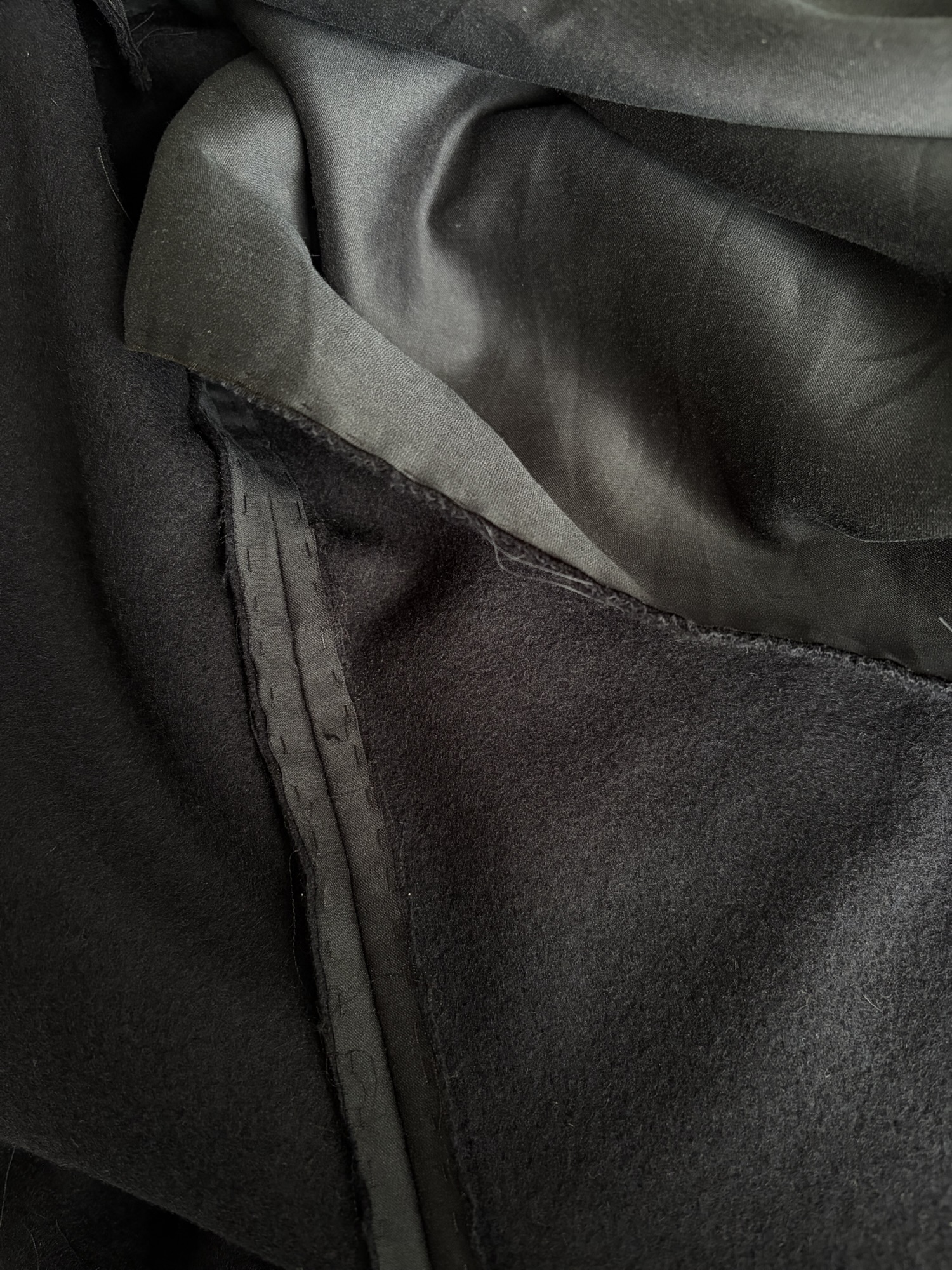
The most frustrating and time consuming element to this project was the pankou buttons. Strips of the outer fabric was used to make the buttons and although I eventually learnt how to make these buttons quickly from a Youtube tutorial, sewing them on was time consuming. Later, I realised that fastening them also came with a degree of head bashing on the wall. Nevertheless, I persevered and these buttons really made the jacket recognisable as a Changshan.
I wore it recently and I really like the fact that it is something completely different to what I currently have in my wardrobe. The cut is generous and it is very easy to move around in it. I can see this jacket becoming a staple in my winter wardrobe even though it is navy!
When I showed it to my mom, she said “you look old now!” Well, the reality is I’m not getting younger. After all, in a blink of an eye, this blog is 15 years old. Who knows what the future holds but it would be interesting to read back on all my posts when I eventually retire.
To my future self, I hope that the effort of keep this blog going has proved that you were right all along. Love xx.


Gorgeous. And you don’t look old, you look distinguished!
Thank you. I’ll go for that.