
Recently I had to prepare a lesson to show my students the versatility of pattern cutting and using it as a start for the design process. For a very long time, pattern cutting had come quite easily for me as I was self taught. I loved the experimental bit of pattern cutting and as I wasn’t told what to do (or what not to do), I learnt to make my own mistakes but at the same time, developed new techniques. When I eventually went to study pattern cutting at Central Saint Martins, I discovered that some of my techniques already existed but were done in a different way to mine. This meant that I was able to compare notes and in my discussions with my tutors, it allowed me to understand how different institutions would approach this technical subject. Luckily for me, I was taught that anything is possible; the CSM way.
This project has been very sentimental to me as it reminded me of someone who was very dear to me. When I was learning pattern cutting, I was fixated with experimental/creative pattern cutting. My tutor and later my mentor, the late Patrick Lee Yow, asked us a question during class which got me thinking.
Who dictates what a sleeve is and how is it used?
At first read, this question had an obvious answer, but when you think about it, traditional schools would tut if you said a sleeve was anything other than a covering for your arms. But being at Central Saint Martins, the question provoked critical thinking and the possibility that we had been institutionalised to accept that a sleeve cannot be anything else. When I did my research, I discovered from a styling point of view that sleeves of shirts and sweaters have been tied around the neck, popular with a preppy ‘Ivy League’ style of, but at the same time, sleeves had also been tied around the waist as part of the 1990s grunge look. Both very different styles, utilising the same part of a garment and none worn on the arms.
What started as an innocent question now forms how I approach my practice. Critics will always have an opinion but to me, validity towards my designs comes from mistakes, adaptability and how I can wear it with other garments I have made. This forms my never ending collection of experimental garments (using dead stock fabrics) that I continue to enjoy wearing. Slow fashion at its slowest but best.
To execute this project, I decided to make a pair of trousers with sleeves hanging from the sides. This was how I initially approached the process.
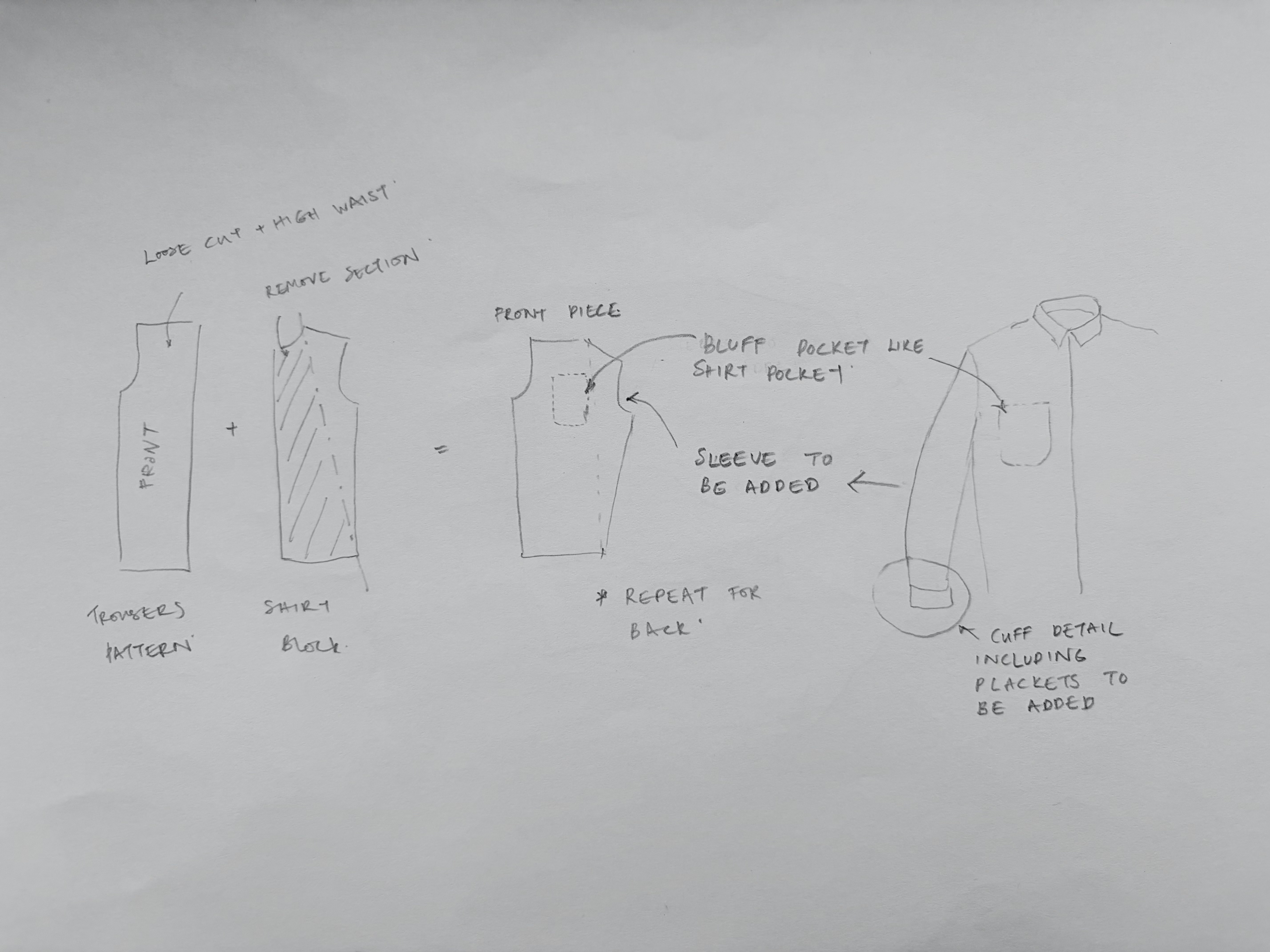
The development of this pattern was actually very straightforward, as it is essentially part of a trouser pattern merged with part of a shirt pattern. It was also made easy due to the fact that I had my reliable trousers and shirt pattern that I developed and changed throughout the years.
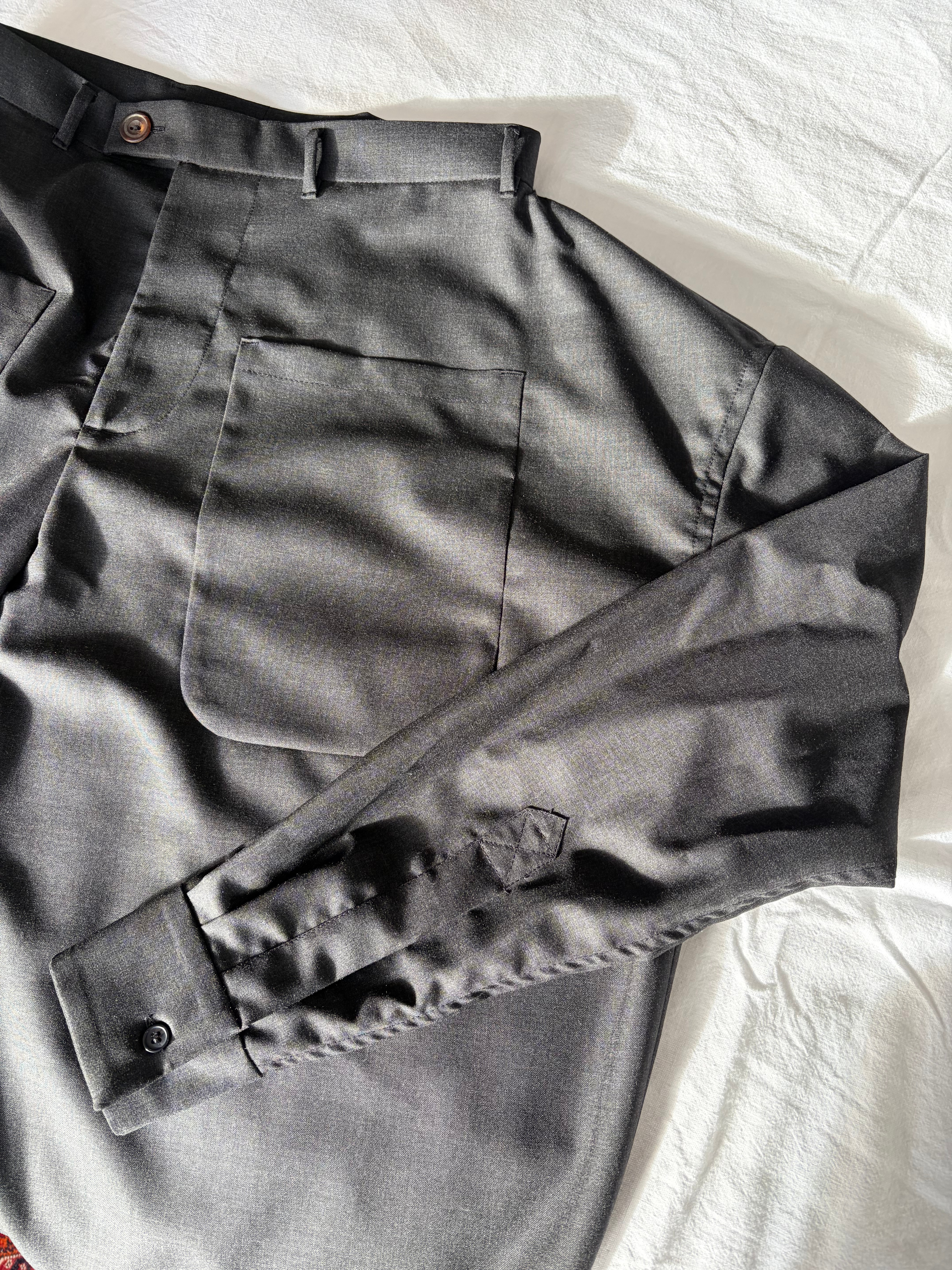
I have also utilised the shirt pocket for the trousers and sewed in a bluff pocket. This was very handy as the position of the sleeve meant that side pockets could not be inserted. Skimping on the details is not something I do, so I went all the way to insert a working sleeve with a placket, cuff and buttonhole.
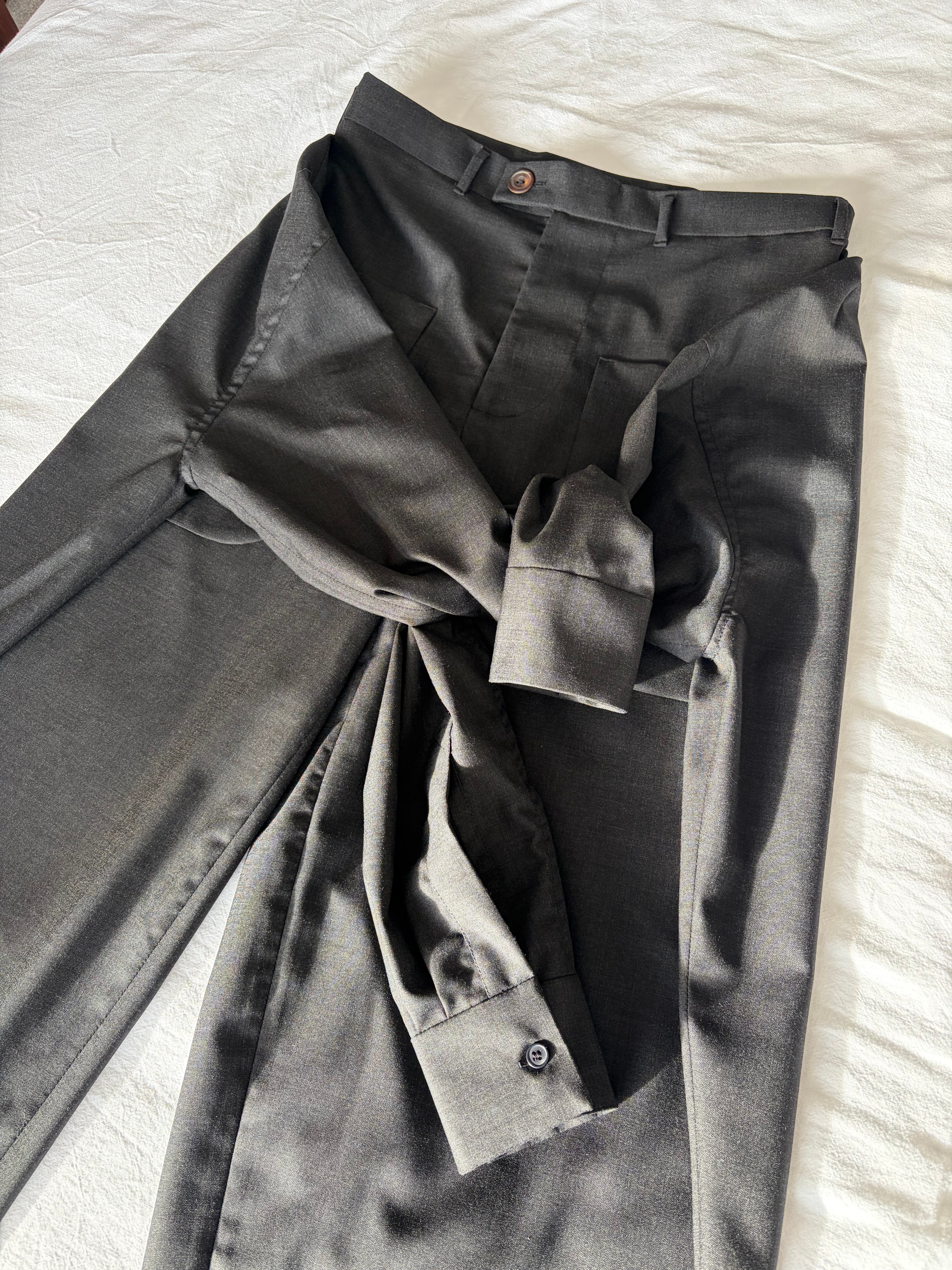
When sewing this piece, it really played with my mind. One minute, I was sewing in the zip for the trousers, and the next, I was attaching the placket. I was also laughing when I completed it as the trouser looked like a jumpsuit for a torso-less person.
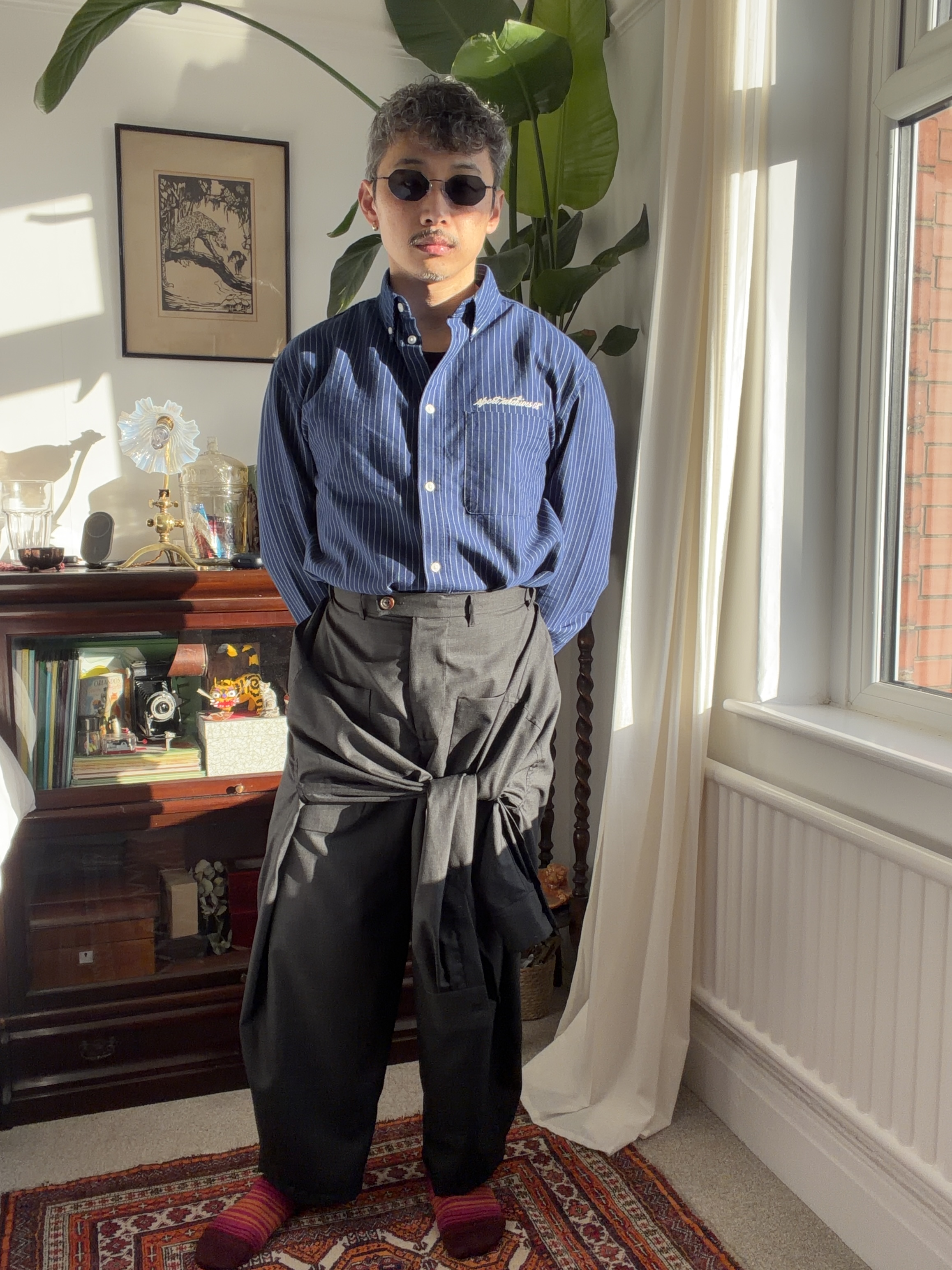
Having the sleeves tie from the waist also meant that any excess fabric around the bottom can be pulled in to create a more pleasing shape. The sleeves can also be tucked in, left as it is or tied to the back.
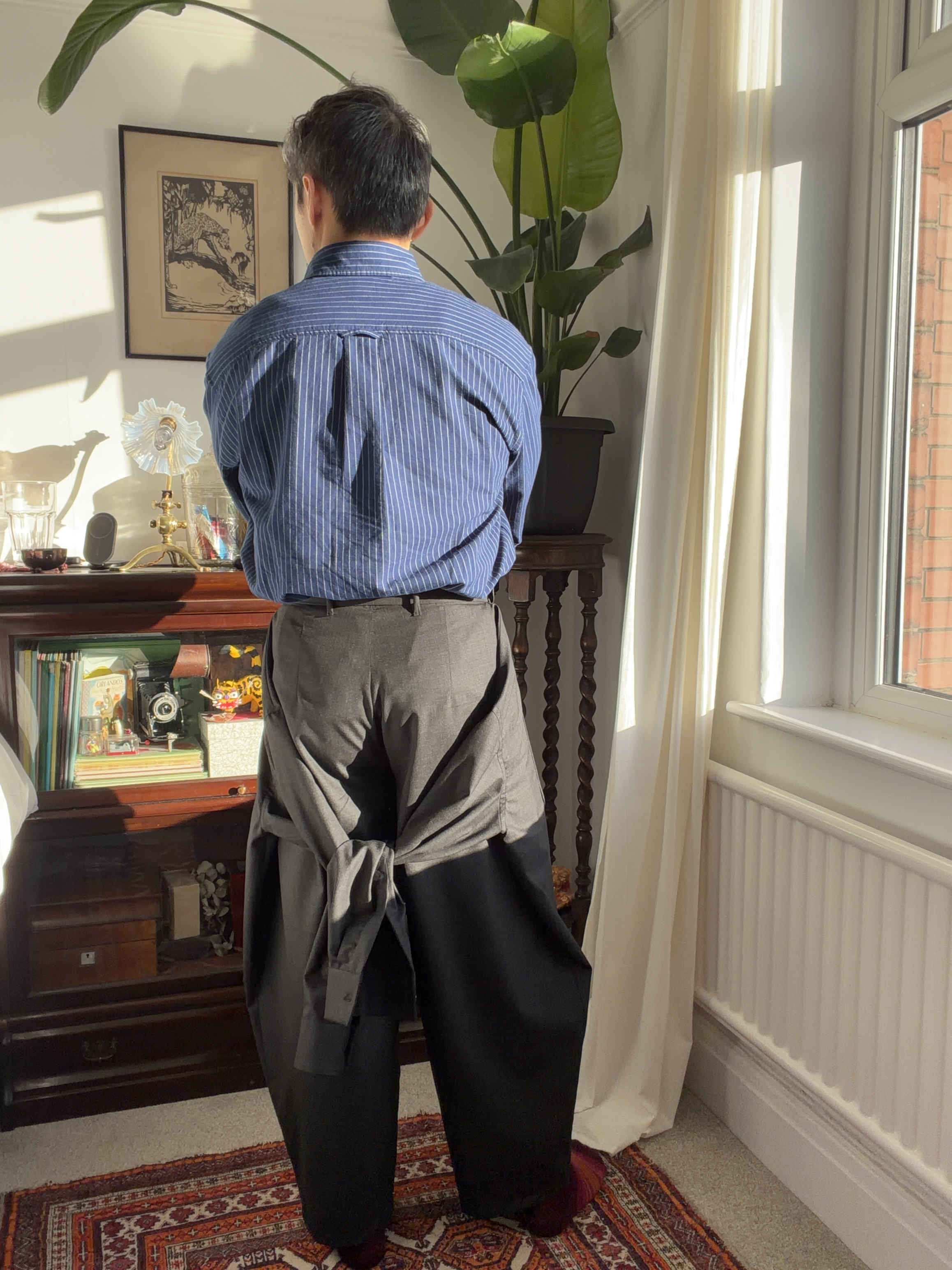
Someone might see this and think what a stupid thing to do. I’m sure Mary Quant had the same comments towards her mini skirts, but if one thing is certain, it is that mini skirts have stood the test of time, not the critics. After all, I always encourage my students by telling them.
What if, why not?

 Stephen Yong
You are so so creative!
Thank you ❤️
I got hooked on your techniques when I saw the dress featured in your bias/spiral cut dress post. Many years ago I think. So glad the link was included in your featured posts. I tried many times to duplicate that and never quite got it right. It is ingenious how that worked. I understand the concept and it flows beautifully.
I always enjoy seeing your creations.
The bias cut technique was something I learnt in Uni and it makes sewing so much easier. As long as the pattern is cut at 45 degree angle with the grainline cut in line with the selvedge of the fabric, that’s it. Try it out.