
I love antiques and will always choose old rather than new because of the history behind each item. Often my partner and trawl antique and charity shops for ‘hidden gems’, and my bedtime routine regularly includes scrolling online sites to see if I can bag a bargain. Not only is it more sustainable but the saying ‘they don’t make it like they used to’ always proves itself.
On one occasion, I managed to bag an antique lamp by a famous maker, and then mismatched an antique glass shade with it, as the original was long gone. This was given to my partner as a Christmas present and became a feature in our home for many years. That was until recently, when an accident meant that the glass lamp shade smashed into so many pieces that I was still picking up shards weeks after the accident. Luckily as the base was made of copper and brass, it survived the accident but stayed ‘naked’ for a while.
My partner initially tried to source another glass shade, but when he saw images of the lamp with its original copper shade, a glass shade suddenly did not look right. We searched high and low, but it was impossible to find an original copper shade . So recently, I tried to see if I could transfer my pattern cutting skills and reproduce the original copper shade instead.
Luckily, the V&A museum has an online archive of their collection and I was able to get images of the original lamp shade. Starting with cardboard from a cereal box, I created a model of how it might work and how it could be pieced together. As soon as the materials arrived, I went straight into making, with impressive results. It took me quite a while to get the model right, so I guess the preparation made the final process much easier.

The only problem I had now was the scraps from my project. I felt that it was a shame to throw these curled copper offcuts away, but doubted I could recycle such small quantities. I left the scraps in a box stored away in the attic until recently, when a visitor wore some earrings that looks like they were made out of a piece of beaten copper wire in a serpentine shape.
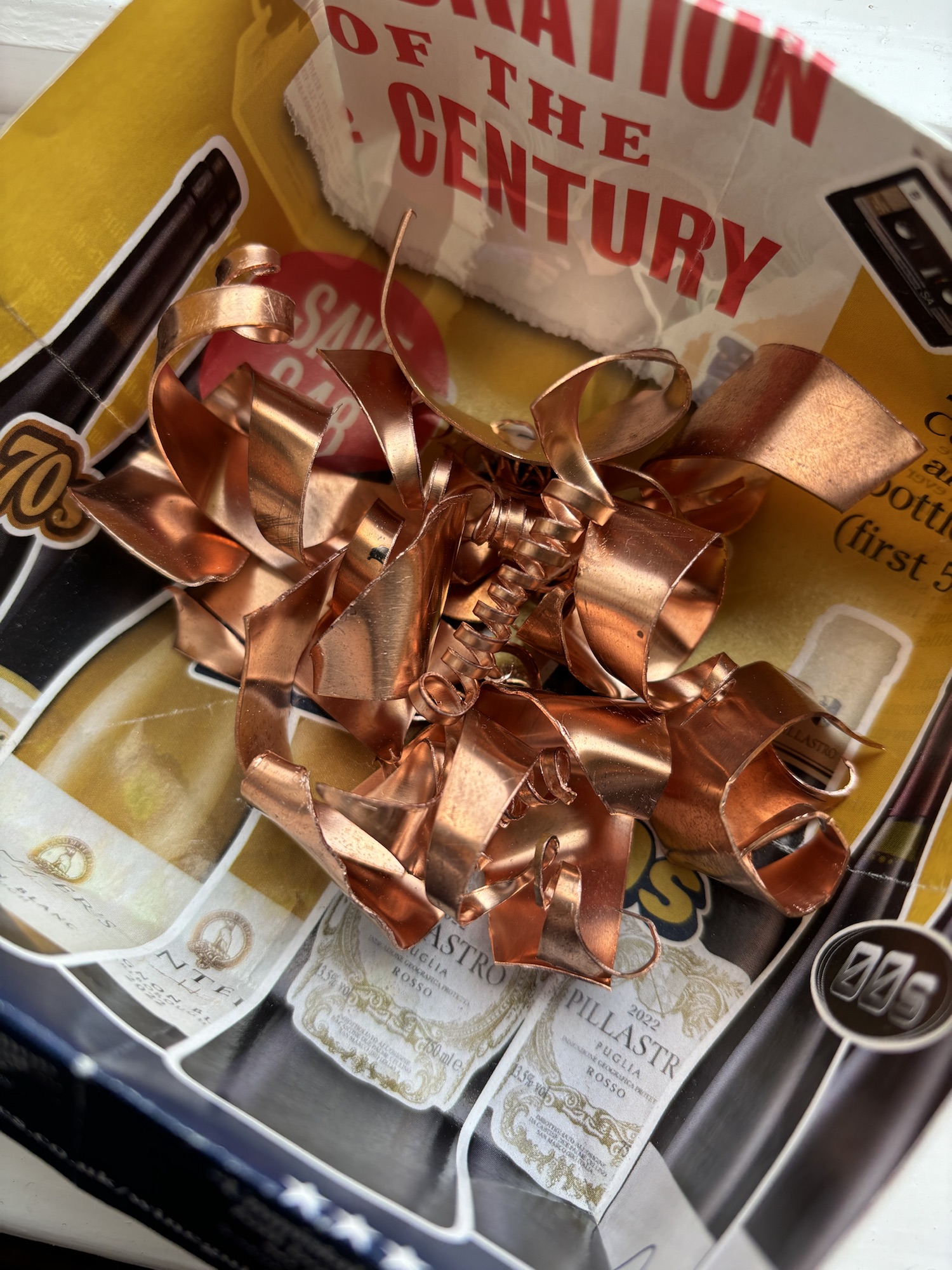
That night (with a bit of help from some cocktails), I revisited the scraps of copper and without much thought, fashioned a pair of earrings. This was the easiest and most rewarding project as it was effortless. The cutting process of making the lamp shade had created this spiralled copper pieces and as this natural shape was already so beautiful, I used it as it is. Call it lazy or a coincidence, but working within constraints led to a design which utilised waste to create something which looks unique and aspirational.

With the first prototype made (and gifted to my visitor in thanks for the inspiration), I continued to experiment with the scraps and eventually produced other designs with a pearl and a jade. The finished pieces look effortless but contemporary at the same time. To be honest, I wish all design processes were this easy.

This whole process taught me a very important lesson. Often, there is a danger of over-designing or getting stuck trying to come up with a ‘smart’ design (especially when time and cost is a factor). In ‘forcing’ myself to design, I often create an unnecessary amount of waste with the end product being not fit for purpose. Just like a lot of products out there, the original product continue to be the best and these ‘alternatives’ are delegated to the charity shops and inevitably, the land fill.
I never want to deprive myself or anyone else the freedom of choice, but there comes a point where compromises need to happen. I would like to continue making but as a starting point, sustainable options should be pegged at the same level as the design, not as an afterthought. Understanding the relationship between concept and sustainability allows me the opportunity to create something beautiful.
This reminds me of advice my late mentor often told me. He would ask me to observe everything meticulously because beauty is often in front of us. We either can’t see it or choose not to.

 Stephen Yong